Hi, I'm
Sandeep.
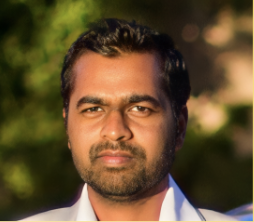
I am a software development manager and data scientist with over 10 years of experience helping turn research into real-world usable tools. My work has spanned neuroscience, healthcare, cancer research, and language tech. My background spans dual master's degrees, computer engineering and business administration, which means I spend a lot of time translating between scientists, engineers, and stakeholders.
What drives my work: the belief that meaningful insights come from understanding context, simulating and exploring edge cases, and most importantly, understanding human psychology as it pertains to the problem at hand. I love solving business problems, whether they need a data solution, a better process, or just a fresh perspective. Here are a few of those areas.
Growth & Automation Opportunities
Identifying new revenue avenues through better marketing insights, new feature ideas, and areas ripe for automation, then testing them in small, realistic pilot environments that can be confidently scaled when they work.
Research → Product
Taking peer-reviewed tools and making them usable at scale.
Raw Data → Reliable Data
Designing automation and QC systems that handle real-world scenarios, such as missing values, format inconsistencies, edge cases.
Cross-Discipline Communication
Bridging neuroscientists, engineers, and business stakeholders so nobody is guessing what the other team meant.
Projects
Work I've been part of, and problems I've helped solve.
Brain Pattern Visualization Tool
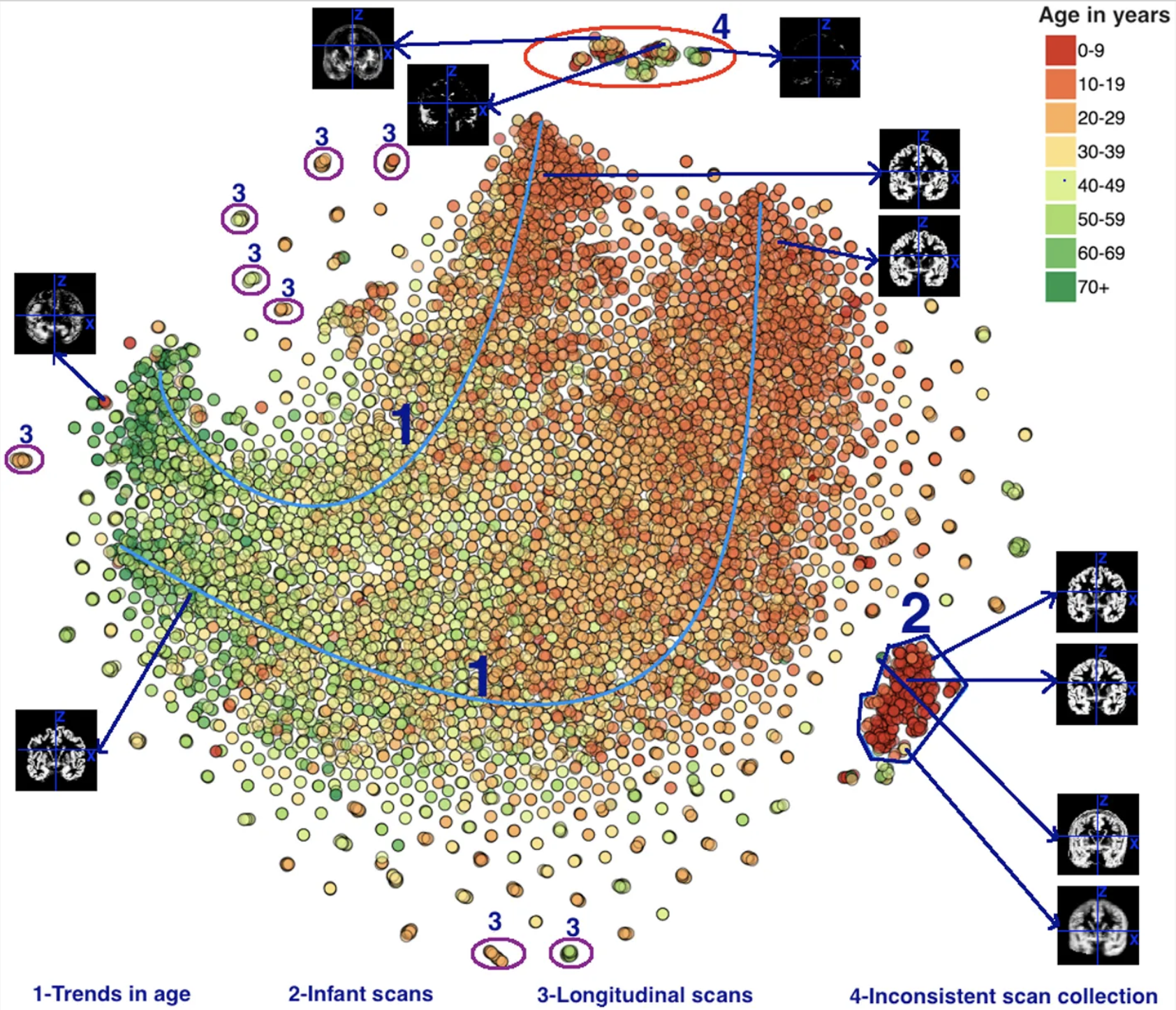
First-author publication. Led the design and development of an interactive tool to extract insights from 10,000+ brain scans, identifying and summarizing human brain patterns across multiple research studies.
Handedness Prediction from MRI
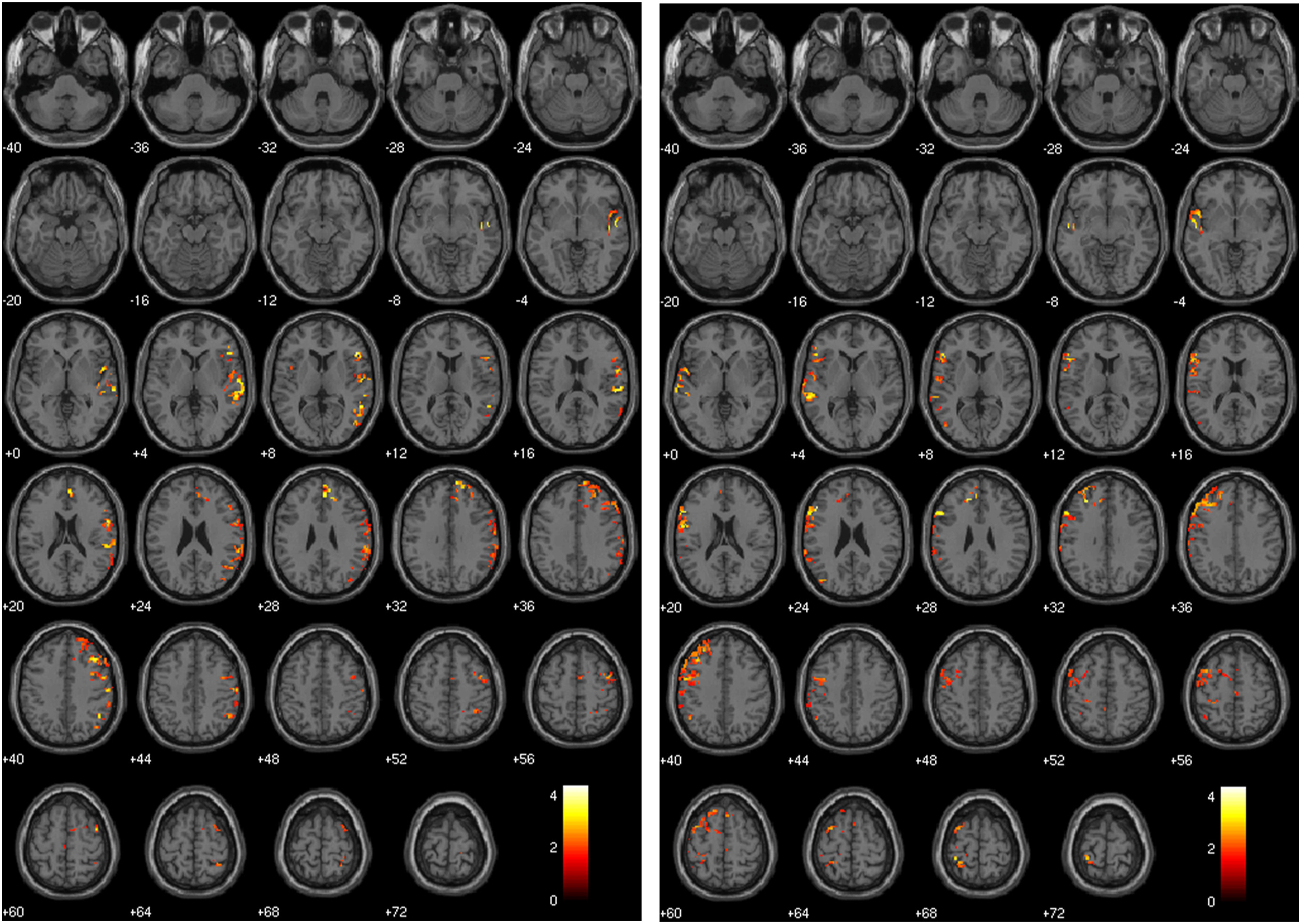
First-author publication. Evaluated a novel deformation-field based classification approach for quantifying brain structural asymmetries across multiple datasets, achieving over 80% accuracy in classifying left/right-hand dominance from MRI.
Neuroscience & Brain Imaging
- Over a decade of hands-on work in neuroimaging, building and managing QA workflows across thousands of human brain MRI scans to ensure data quality for large-scale studies
- Created interactive dashboards and visualizations (including t-SNE) to make complex neuroimaging insights legible to both technical and non-technical audiences
- Designed and built automated QA workflows and dashboards to visualize results at scale, without sacrificing domain-informed judgment.
Secure Multi-Site Research
Software Development Manager
- Led software development for a HIPAA-compliant federated analysis platform enabling distributed ML across research organizations, without raw data ever leaving each site
- Managed grant deliverables and grant compliance timelines; bridged neuroscience and engineering teams to align priorities and system architecture
- Assisted with provisional patent draft, research commercialization plan, market analysis, and business strategy for a psychiatric decision-support tool
Flow Cytometry Automatic Sample Separation
Research Assistant · Technical Support Analyst
Helped implement automated detection methods for high-throughput cancer drug-screening workflows. This involved both hardware setup to detect bubble signals and software to automatically separate affected samples, significantly reducing manual data cleaning and improving throughput across thousands of screening samples.
Language & Audio at Scale
Data Analysis Programmer
- Built automated audio-text synchronization pipeline, enabling live verse highlighting in the Bible.is app for 300+ languages
- Developed mathematical correction processes to handle audio-text mismatched datasets
- Designed QC checks to auto-evaluate audio and text sync accuracy to help reduce manual review efforts
BrainsDen
A global simulation platform (currently in development) where you deploy tactical solutions to real-world economic, infrastructure, and environmental crises, and get scored against strategists worldwide.
Biggest Challenges
Enter the simulation. Deploy tactical solutions to critical economic, infrastructural, and environmental crises. Our engine evaluates your strategy. Rise through the global ranks.
Explore Intel
Scan the global radar for active economic and infrastructural anomalies. Select a target region.
Simulate Solution
Draft your policy or business strategy. BrainsDen simulates feasibility and projects global impact.
Compete
Achieve high efficacy scores. Rank among top global strategists and dominate the leaderboard.
Areas of Interest
Domains and clients I enjoy working with.
Healthcare & Life Sciences
Teams sitting on sensitive clinical data that needs analysis but can't leave the building. I've built the privacy-preserving pipelines that make cross-institutional research possible.
Research Institutions & Universities
Labs that have done the science and published the paper, but need someone to help turn it into software that other people can actually use. I've been that bridge between research and product.
Early-Stage Startups with Data Problems
Founders who have a hypothesis and a data but no clear pipeline to move from raw data to insight. I can help design the architecture, MVP, and QC.
NGOs & Mission-Driven Organizations
Organizations doing impactful work at scale, often across languages, cultures, or geographies, who need data infrastructure that can handle real-world data and edge cases.
Automation & QA
If your team is spending significant time manually checking data quality, I can help identify areas of automation, freeing people up for the judgment calls that actually need humans.
The Ideal Client
You're looking for someone with core problem-solving skills and the ability to apply knowledge, whether provided directly, through databases, or through AI tools. You have a recurring business problem that keeps coming back, something your internal team hasn't been able to crack, whether it's a deep data challenge or a broader operational hurdle. You need outside perspective from someone creative and technically grounded, who isn't afraid to try unconventional solutions in a safe, low-risk environment before committing to a full rollout. You're not looking for a vendor. You're looking for a thinking partner. Some may say it's an ambitious goal, but you say, 'let's give it a shot!'
My Approach
How I think about problems.
Context is key
AI tools can crunch enormous amounts of information quickly. But knowing how to apply that knowledge to a specific real-world problem, that's a human skill. A data model doesn't know that your data has a quirk from three years ago, or that the business logic changed mid-project.
I spend time understanding the context of the problem before I can help meaningfully. Some domains are easier to get up to speed on than others, a navigation app, a home utility product, or a hospitality business serves clear, practical needs that are straightforward to grasp. More specialized domains take longer, and I'll be upfront about that. Either way, the engagement starts with me learning your world, not just your data.
Not every problem has a technical solution
Can you solve a people management issue with a data analytics dashboard? Sometimes no, because the root cause is organizational, not informational. Part of my job is identifying what kind of problem you actually have before recommending a solution. If the answer is "this isn't a data problem", I'll tell you that after our discovery call, and that honesty is one of the most valuable things I can offer.
Outside perspective changes everything
Sometimes the solution one person inside a company is looking for isn't the solution their leadership actually needs. Internal employees navigate politics; I don't. I come in without a stake in the existing setup, which means I can ask the uncomfortable questions, surface the real constraints, and give you a clear-eyed view, with no strings attached.
Using AI tools
The tools help me move faster and cover more ground; the thinking, the judgment about what matters, and the translation into practical recommendations are mine. That's the difference between a search result and a solution. Ultimately, the problems I'm most drawn to are the ones that sit at the edge of what AI can't handle alone, where domain intuition, human psychology, and creative thinking still make the difference.
What to Expect
What working together actually looks like.
No 40-slide decks before we've talked. Here's how a typical engagement runs, from first conversation to something real in your hands.
Discovery Call
We talk for 30–60 minutes. I learn about the project goals, background, context, accessible data, and more. Sometimes goals turn out to be slightly different from how they're first described. That's fine. This is where we find the real one.
Problem Definition & Scoping
I put together a short written summary of what I heard, what I think the core problem is, and what a realistic scope looks like. This isn't a proposal, it's a shared starting point so we're not building toward different things.
Data Exploration & Audit
Before writing a single line of production code or attempting to solve the business problem at hand, I get my hands on the data. What does it actually look like? Where are the gaps, inconsistencies, and edge cases? If the problem turns out to require a specific domain expert and I'm not that person, this is also where we'll figure that out. This phase almost always changes the plan, and that's the point. Better to find out now.
Sync Up on Deliverables
Once we've explored the data and have a clear picture, we sync up on deliverables, agree on a contract, and proceed. No surprises, just a shared understanding of what's being built, by when, and what success looks like.
Build in Tight Loops
I work in short cycles with frequent check-ins rather than disappearing for weeks. You see real output early, even if rough, so we can course-correct before too much is built in the wrong direction. Feedback is part of the process, not an interruption.
Handoff & Documentation
At the end, you get something your team can actually maintain, documented, explained, and not locked inside my head. If needed, I can train your team or support a transition period. The goal is to leave you more capable, not more dependent.
Updates
What I'm thinking about lately.
Exploring: Wellbore Geology Prediction
Currently diving into the ROGII Kaggle competition, building ML models to predict geology along horizontal wellbores from drilling data. The challenge: forecast True Vertical Thickness (TVT) for evaluation zones using trajectory data, gamma ray logs, and vertical reference wells. It's the kind of messy, domain-heavy prediction problem I love, where understanding the geology matters as much as the algorithm.
How to Spot AI Generated Human Videos
AI-generated video of humans has gotten remarkably convincing, but it's not perfect yet. The tells are subtle: unnatural blinking patterns, fingers that merge or split mid-gesture, lighting that shifts inconsistently across the face, and backgrounds that warp slightly when the subject moves. Audio-lip sync is another giveaway, as the mouth shapes often lag behind or don't quite match certain consonants. The more you train your eye on these details, the harder it becomes to be fooled. Worth paying attention to as this technology evolves fast.
Contact
Let's talk.
Whether you're working on a data problem, a human psychology problem, a creative solution, or just need an extra brain to think outside the box, my inbox is open.
Email me at
sandeep.panta34@gmail.com